Girls Ballet Recital & Dance Party Dresses: The Complete Buying Guide
For a spring recital, you need a dress that survives three dress rehearsals, holds its shape under stage lights, and lets your daughter do a full 360-degree spin without the bodice riding up. Measure her height in centimeters — not her age — and look for a stretch bodice with at least 5% elastane and a tulle skirt lined in 100% combed cotton so the layers sit against her skin without scratching.
Why the Skirt Construction Determines the Twirl
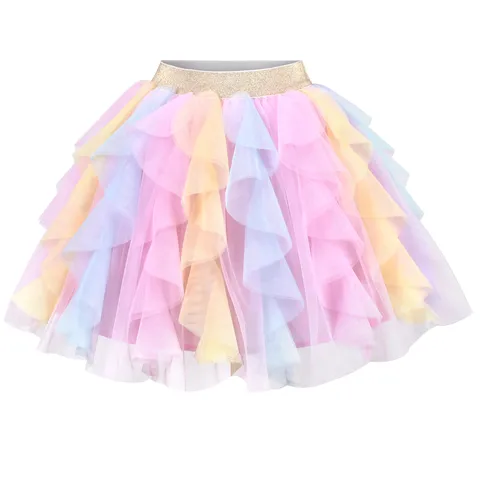
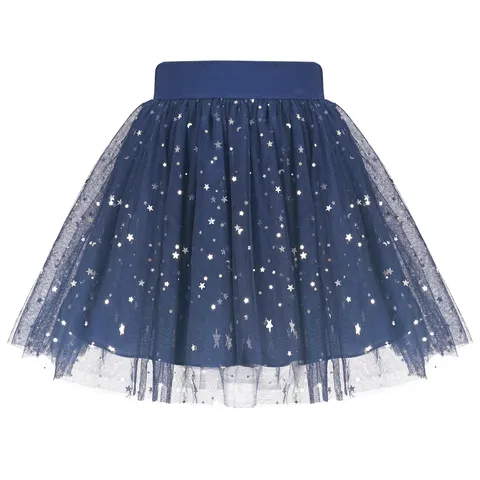
A true full-circle skirt is cut from a single 360-degree pattern piece, giving the hem a continuous sweep of roughly 180–220 cm (71–87 inches) in circumference for a size 6. Half-circle and A-line cuts look similar on the hanger but collapse flat during a pirouette instead of fanning out horizontally.
Layer count matters as much as cut. Three to five layers of 15–20 GSM soft tulle over a cotton underskirt creates the lift parents see in recital photos without adding enough weight to tire a child during a 90-minute show. Fewer than three layers produces a limp skirt; more than six in stiff tulle can cause redness on thighs within 20 minutes of active movement.
- Full-circle cut — confirm with the retailer; 'full skirt' in product copy does not always mean a 360-degree pattern.
- 3–5 tulle layers — the sweet spot for lift, weight, and comfort during rehearsal.
- Cotton underskirt lining — must extend to within 2 cm of the hem so no raw tulle edge contacts the leg.
- Flat-felled or overlocked seams on the lining — run a finger around the interior waistband before buying; rough serged edges irritate skin during jumps.
Sizing for Movement: Measure Height, Not Age
Children's dress sizing varies by up to 8 cm between brands at the same labeled age. Measure your daughter's height barefoot and compare it to the brand's height range, not the age range. At Sunny Fashion our size 6 fits 112–118 cm (44–46 in); our size 8 fits 119–128 cm (47–50 in). If she falls between sizes, choose the larger one and have the shoulder straps taken in — adding length to a too-short skirt is far harder.
For dance specifically, add 2 cm of ease to the chest measurement over a standard dress fit. A bodice that fits perfectly standing will compress the ribcage during arabesques and cartwheels. Stretch bodices with a four-way elastane-cotton blend (typically 95% cotton / 5% elastane) accommodate this naturally without requiring extra ease.
- Measure height, not age — use a wall and a ruler; update the measurement within 4 weeks of ordering.
- Check the bodice stretch — the fabric should recover fully after being stretched to 130% of its resting width.
- Adjustable straps — look for button-loop or slider adjustments; fixed straps on a growing dancer slip off the shoulder within one season.
- Snug but not tight waistband — you should be able to slide two fingers flat under the waistband when the child is standing upright.
Stage-Ready Durability: What Survives Recital Season
A spring recital typically means 4–6 rehearsals plus the performance itself. The stress points are the bodice-to-skirt seam, the zipper or button placket, and the shoulder straps. Double-stitched seams at the waistline junction and a concealed zip with a fabric guard behind the teeth are the two construction details that separate a dress that lasts one season from one that lasts three.
Color fastness under stage lighting is underrated. Warm LED stage lights run at 3,000–4,500 K and can make poorly dyed pastels look washed out or yellow. Ask whether the fabric is reactive-dyed (better color depth) or pigment-printed (fades faster with washing). At Sunny Fashion all our ballet colorways are reactive-dyed and rated to 40 washes before any visible fading.
- Double-stitched waist seam — tug firmly at the bodice-skirt junction in the store; a single stitch line will gap.
- Concealed zip with guard — bare metal teeth against a child's spine cause distraction and discomfort mid-performance.
- Reactive dye — holds color through repeated 30 °C machine washes; pigment print does not.
- Reinforced strap anchors — bar-tack stitching at each strap attachment point prevents the most common recital-day wardrobe failure.
Ordering Timeline and Care for Spring Recitals
Spring recitals typically fall between late April and early June. Order no later than 8 weeks before the performance date to allow time for delivery, a fitting, and any alterations. Custom or made-to-order styles need 10–12 weeks. Ordering the week before a recital and paying express shipping is the single most avoidable parent stress of the season.
Wash the dress once before the first rehearsal — this pre-shrinks the cotton lining (expect up to 3% shrinkage on first wash) and confirms the dye is stable. Machine wash cold (30 °C / 86 °F), gentle cycle, inside out. Lay flat or hang to dry; tumble drying at high heat collapses tulle layers and can cause the cotton lining to shrink faster than the outer fabric, creating a puckered hem. Store hanging, not folded, to preserve the tulle's lift between rehearsals.
- Order 8 weeks out — 10–12 weeks for custom or embroidered styles.
- Pre-wash before rehearsal 1 — 30 °C gentle cycle, inside out, to pre-shrink the lining.
- Hang to dry — never tumble dry; high heat collapses tulle and causes differential shrinkage.
- Store hanging — a folded tulle skirt takes 24–48 hours to recover its shape, which is a problem the morning of a recital.
Budget Guidance: Where to Spend and Where to Save
For a one-time costume worn twice, a $35–$55 dress with a cotton-lined skirt and basic stretch bodice is entirely reasonable. For a dress that doubles as a party dress and gets worn 10–15 times across the season, investing $65–$95 in reactive-dyed fabric, adjustable straps, and a reinforced waist seam pays back in cost-per-wear. Avoid dresses under $28 in this category — at that price point, cotton linings are almost always replaced with unlined or polyester-lined tulle to hit the margin.
Free worldwide shipping (as we offer at Sunny Fashion) and a 30-day return window change the risk calculation significantly. Order two sizes, do a movement test at home — have her do five full spins and two jumps — and return the one that doesn't perform.
Shop Ballet & Recital Dresses
See All Ballet Dresses →

Common questions
What size ballet recital dress should I order for my daughter?
Measure her height in centimeters barefoot and match it to the brand's height chart — not the age label. If she is between sizes, order the larger size and adjust the shoulder straps. For dance, also confirm the bodice has at least 5% elastane so it stretches with movement without slipping.
Will tulle scratch my daughter's skin during a long rehearsal?
Unlined or polyester-lined tulle can cause redness within 20 minutes of active movement. Look for a dress with a 100% combed cotton lining that extends to within 2 cm of the hem, so no raw tulle edge contacts the leg. Run your hand inside the skirt before purchasing to check that the lining seams are smooth, not raw-serged.
How do I wash a ballet recital dress without ruining the tulle skirt?
Machine wash cold (30 °C / 86 °F) on a gentle cycle, inside out. Lay flat or hang to dry — never tumble dry, as high heat collapses tulle layers and causes the cotton lining to shrink faster than the outer fabric, creating a puckered hem. Wash once before the first rehearsal to pre-shrink the lining.
How far in advance should I order a ballet recital dress for a spring performance?
Order at least 8 weeks before the recital date for standard styles, and 10–12 weeks for custom or embroidered options. This allows time for delivery, a proper fitting with movement testing, and any strap or hem alterations before the first dress rehearsal.
Still deciding? Our size guide matches her height to a size in seconds, and every dress ships free worldwide with 30-day returns. Questions: [email protected].